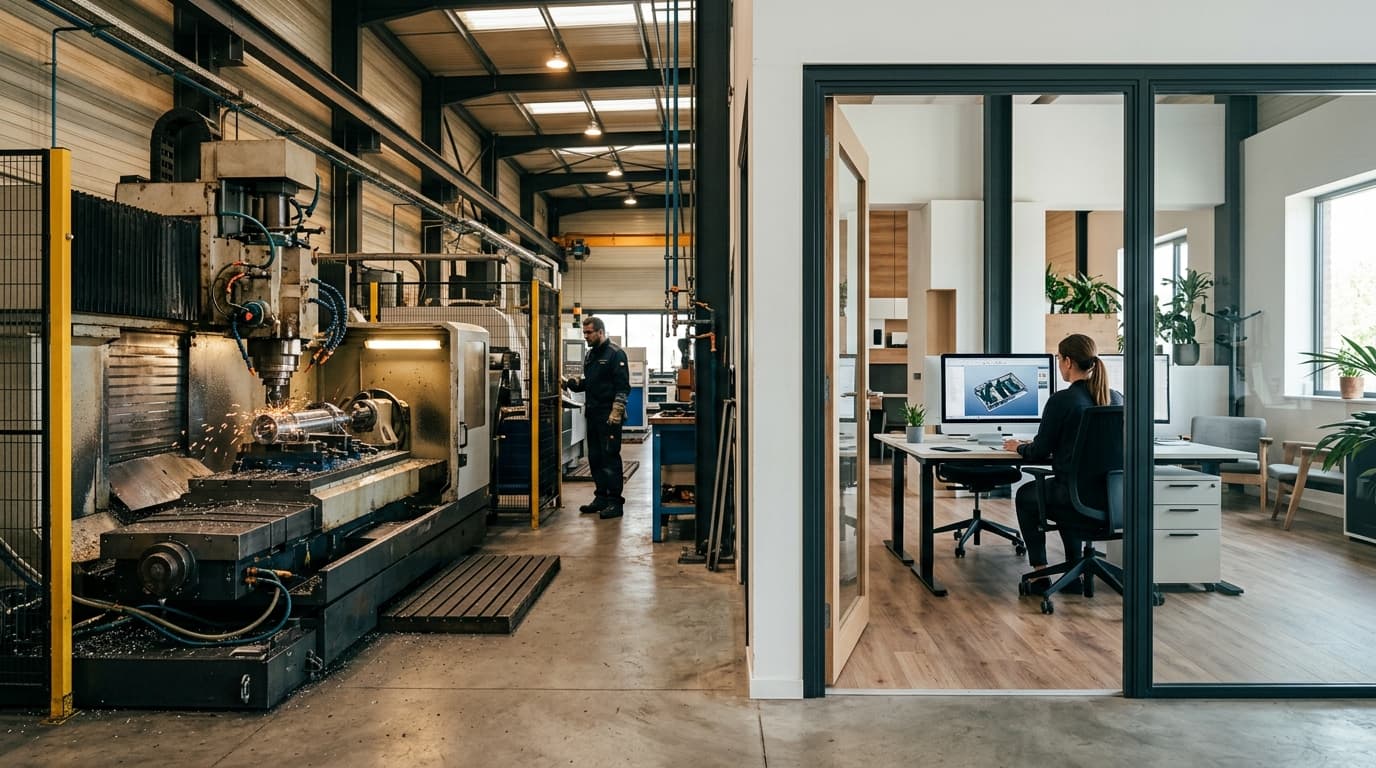
State-of-the-art shop floor, spreadsheet-driven office
The $2.5 trillion gap between what manufacturers build and how they sell it
In this article
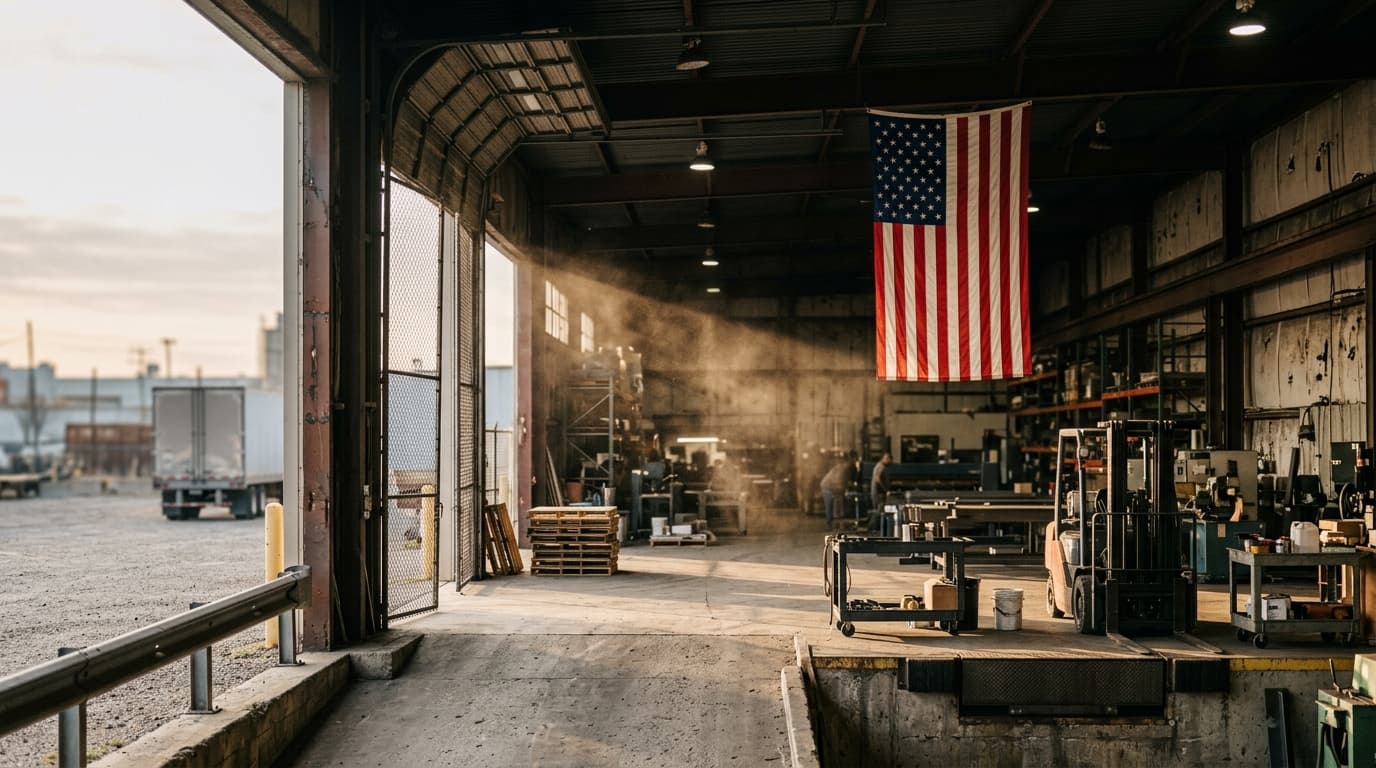
Mike runs a 200-person precision machining company outside Grand Rapids. Last year he spent $2.3 million on a new Mazak HCN horizontal machining center with a robotic pallet pool. Real-time spindle utilization on a dashboard. Tolerances inside half a thousandth, held shift over shift. His shop floor looks like it belongs in 2030.
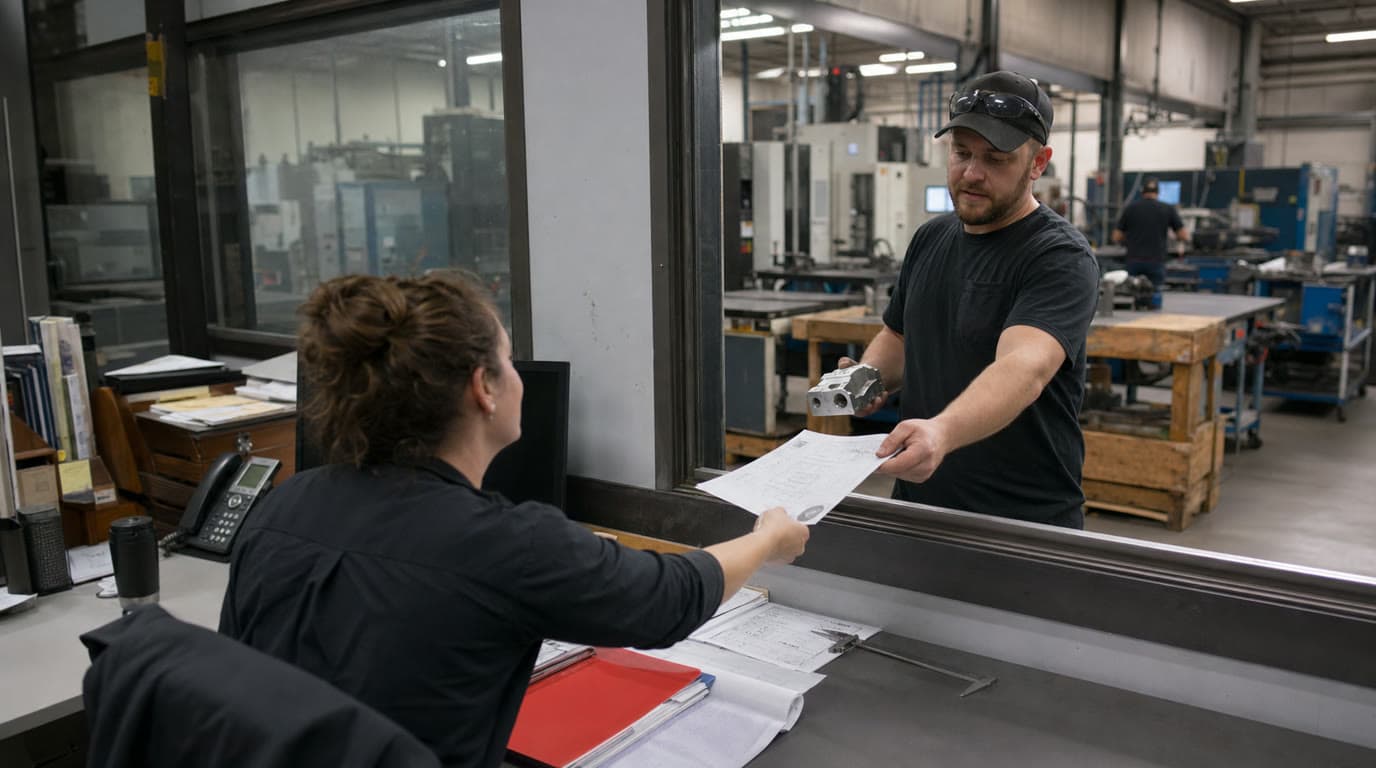
Walk 50 feet to the office. His estimator is working in Excel. Quotes go out as PDF attachments from Outlook. The pricing spreadsheet -- the one that determines whether Mike makes or loses money on every job -- was last meaningfully updated by a guy who retired in 2021. That's the manufacturing back office technology gap, and it's the binding constraint on American manufacturing competitiveness.
The billions that went into the floor
U.S. manufacturing output is roughly $2.5 trillion annually. Over the past 20 years, the industry has poured capital into the shop: CNC machining centers, coordinate measuring machines, laser cutters, collaborative robots, IoT sensors feeding MES systems, real-time OEE dashboards. It worked. Output per worker hour has climbed steadily. Scrap rates fell. Cycle times compressed.
The results show up in the data. 77% of manufacturers now utilize AI solutions, according to Deloitte's 2026 manufacturing outlook. But look at where that AI is deployed: quality inspection, predictive maintenance, production scheduling. The investment followed the machines, because machines are easy to measure. Downtime is visible. Scrap is countable. ROI on a new robot arm is a spreadsheet calculation that takes an afternoon.
The office was harder to quantify, so it mostly got ignored.
PwC projects that automation in manufacturing will more than double by 2030. Almost all of that growth is on the production side. The back office -- quoting, order entry, customer communication, capacity planning -- is still largely where it was when Mike's pricing spreadsheet was written.
Why the office got left behind
There are three real reasons the manufacturing back office automation gap persisted this long.
First: it was "good enough." A skilled estimator who knows the shop intimately can quote with remarkable accuracy. She knows that Job #4471 ran 12% over because of a fixturing problem they've since solved. She knows which customer will haggle and which one just needs the number fast. That institutional knowledge produced acceptable results for decades. The system worked until it didn't -- until she left, or until the sales pipeline got big enough that one person couldn't keep up.
Second: ERP was supposed to fix this. In the 1990s and 2000s, manufacturers spent enormous sums on ERP systems on the promise that a single system of record would connect the floor to the office. It didn't work out that way. ERP implementations are famously painful. Customizations pile up. Data quality degrades. And most ERP systems were built for production and inventory, not for the fast, judgment-heavy work of customer quoting and front-office communication. 70% of manufacturers still enter data manually across systems -- a number that indicts two decades of ERP promises.
Third: tribal knowledge is genuinely hard to systematize. This one is worth sitting with, because it's the most honest explanation. The estimator who spent 15 years quoting titanium aerospace parts carries knowledge that has never been written down. She knows which geometries are deceptively hard to hold. She knows the jobs that look simple but always bleed hours. Getting that knowledge into a format a system can use is a real problem, not a solved one. It's easier to buy a new machine tool than to capture what's in someone's head.
What the gap actually costs
Here is the messy reality: production capacity means nothing if you can't quote fast enough to fill it.
Mike's $2.3 million Mazak runs three shifts. It can produce. The question is whether his office can keep it loaded with the right jobs at the right margins. If his estimator takes four days to turn a quote that a competitor turns in one, he loses the job before he has a chance to compete on price or quality. If his pricing spreadsheet hasn't been updated since 2021, he might win jobs he should have priced higher, or lose jobs he could have sharpened his pencil on.
Tulip's research on manufacturing engineer time use found that engineers spend roughly 40% of their time on non-value-added work -- data entry, chasing information across systems, reformatting outputs from one tool to feed into another. That's not unique to the floor. In the office, the same problem looks like re-keying customer RFQ data from email into a spreadsheet, then re-keying quote line items into the ERP, then re-keying shipment details into a customer portal. The same job touches six systems. None of them talk to each other.
The back-office drag compounds. Slow quotes mean lower win rates. Manual order entry means errors that create rework downstream. Customer communication that runs through individual inboxes means lost context when someone is out. The office is where the shop floor's investment either gets converted into revenue or doesn't.
A seven-figure machining cell that's underutilized because the quote pipeline is clogged isn't a shop floor problem. It's a back office problem.
What this means for the next decade
The industry is starting to reckon with this. Not because of any single product or trend, but because the math stopped working for too many shops.
Labor markets tightened. The estimator who carried all that tribal knowledge got harder to find and harder to keep. Customer expectations shifted: buyers at aerospace OEMs and defense primes increasingly expect faster quotes, digital portals, and real-time order visibility. Younger manufacturers who grew up with software in every part of their lives started asking why their back office ran on tools that predate their career.
The answer isn't another ERP implementation. It's purpose-built tooling for the specific, judgment-heavy work of manufacturing front-office operations: quoting, customer communication, order management, and the connective tissue between them. Software that understands manufacturing context instead of forcing manufacturing into generic business process templates.
The shop floor transformation took 30 years. The back office transformation is just starting. It's messier, less photogenic, and probably more important to near-term competitiveness than any machine tool purchase.
Mike's Mazak is ready. His office needs to catch up.
If your shop floor outpaces your office, we'd like to show you what that looks like fixed.