The quote-to-cash gap nobody talks about
Where accepted quotes go to die -- and what it costs you
In this article
Every Monday morning, Rachel spends two to three hours doing the same thing.
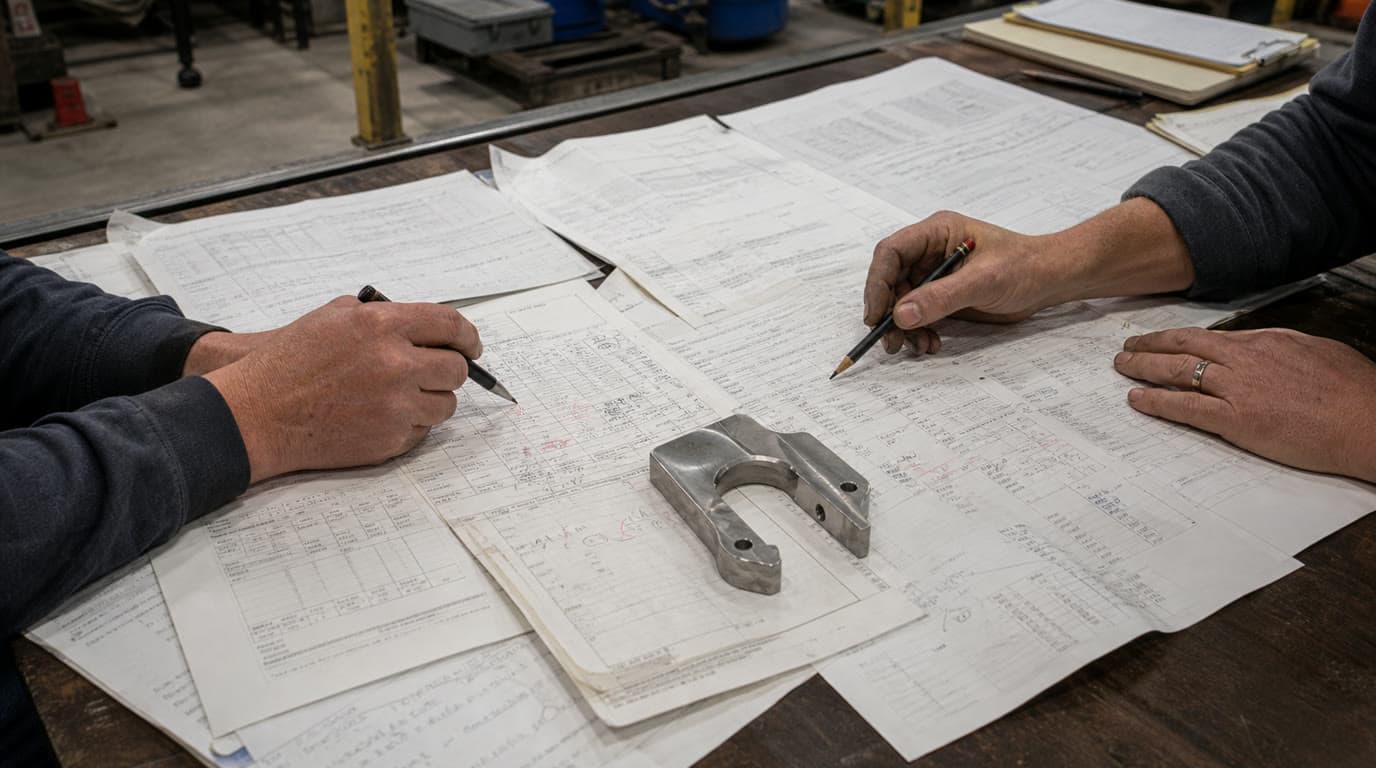
She's operations manager at a 150-person custom plastics manufacturer in Mooresville, North Carolina. Her Monday ritual: pull last week's accepted quotes, open the ERP, and check whether what the sales team closed actually matches what got entered into the system. Usually, two or three orders have discrepancies. Last quarter, a wrong discount tier on a $40K order cost them $6K in margin. Nobody caught it until the invoice went out.
The quote itself was fine. The price was right. The customer signed. Then the data traveled from the CRM to a spreadsheet to an email to a finance coordinator who re-keyed it into the ERP, and somewhere in that chain, the approved discount didn't make it.
That's the quote-to-cash gap. And in manufacturing, it's almost never discussed.
The full lifecycle nobody maps
The quote-to-cash cycle in manufacturing has eight stages: configuration, pricing, quoting, contracting, ordering, fulfillment, billing, and payment. Most manufacturers have decent tooling at the production and finance end. The ERP handles inventory, scheduling, GL. The front end is a mix of email, Excel, and a CRM that the sales team uses unevenly. CPQ exists in the high end of the market but most mid-market shops don't run it. The gap is everything in the middle.
Here's what the handoff chain actually looks like:
- Quoting -- Sales configures the product, runs pricing, sends a quote. This lives in the CRM or a quoting tool.
- Contracting -- Customer negotiates terms. Maybe a discount, a delivery date, specific part revisions. Changes get tracked in email.
- Quote acceptance -- Customer signs or verbally approves. The CRM marks it "Closed Won."
- Order entry -- Someone (usually in sales ops or finance) manually translates the accepted quote into a sales order in the ERP.
- Fulfillment -- Production picks up the order. Scheduling happens. Material is pulled.
- Invoicing -- Finance generates an invoice based on the ERP record.
- Payment -- Customer pays. AR closes it out.
Steps 1 through 3 are sales territory. Steps 5 through 7 are ops and finance territory. Step 4 is where everyone assumes someone else is responsible, and it shows.
The dead zone: quote acceptance to order entry
This is the binding constraint that most manufacturers don't talk about because it doesn't have a clean owner. Sales considers the deal done at acceptance. Finance doesn't touch it until the ERP record exists. The gap between those two moments is where deals stall.
In practice, a quote gets accepted and the following sequence plays out:
The sales rep marks the deal closed and moves on. The accepted quote sits in the CRM. At some point -- usually hours later, sometimes a day later -- someone needs to translate that quote into a sales order. That means opening the ERP, manually entering the part numbers, quantities, pricing, customer shipping details, payment terms, and any negotiated line-item exceptions. If the quote went through two rounds of revisions and the terms were finalized over email, the person doing data entry has to know which version is the ground-truth.
They usually don't. So they ask. The sales rep is on another call. The order sits.
Most manufacturers lose three to five days of dead time between quote acceptance and production start. Not because production is slow. Because the order never made it into the system clearly enough to start.
Why the handoff breaks
The root problem is structural. CRMs and ERPs don't talk to each other in real time. There's no bi-directional integration at most mid-market manufacturers. The CRM is the system of record for the deal; the ERP is the system of record for the order. Between them, data moves via copy-paste, spreadsheets, or email.
Each handoff point is a place where errors compound.
Wrong discount tier. The sales rep approved a 12% volume discount verbally on a Tuesday call. That made it into a revised quote attachment but not into the CRM deal record. The person entering the order uses the CRM record. The invoice goes out at list price. The customer disputes it. AR plays email tag with the sales rep for two weeks.
Wrong specs. The customer requested a wall thickness revision on revision 3 of the drawing. Revision 2 is what's attached to the CRM. The order gets entered from revision 2. Production builds to the wrong spec. Rework conversation. Delayed ship date. A relationship that was fine last month is suddenly tense.
Wrong payment terms. Net 30 got extended to Net 45 during negotiation. That agreement lives in an email thread nobody thought to forward. The ERP gets Net 30. The customer pays on their agreed schedule. Finance flags it late and sends a collections notice. Now you've annoyed a customer who did nothing wrong.
Wrong ship-to address. The customer has six facilities. The quote specified Plant 4 in a line item note. The order entry person used the default on file, which is the corporate HQ. Product ships to the wrong location. You eat the freight to redirect it.
None of these kill a deal. But stack four of them across a quarter and you've got Rachel spending every Monday morning cleaning up messes that shouldn't exist.
The compounding cost
A pricing error at order entry doesn't stay at order entry. It flows downstream into every stage.
Wrong price in the ERP becomes a wrong invoice. A wrong invoice either gets paid incorrectly (margin leak) or gets disputed (cash flow delay). Disputed invoices take an average of 16 days longer to collect than clean ones. For a manufacturer running on tight working capital, 16 days is a real number.
Wrong specs in the order flow into production. Wrong production specs mean rework, scrap, or late delivery. Late delivery triggers penalty clauses in some contracts. Scrap is pure cost.
Wrong terms in the order create collections friction. Collections friction is customer relationship damage. The customer didn't do anything wrong; they paid when they agreed to. But the conversation gets uncomfortable, and that shows up at renewal time.
The error compounds at every handoff. That's the messy reality of a process that has no single owner and no shared system of record between its two biggest software tools.
The process that prevents Rachel's Monday mornings
The fix isn't a new piece of software. It's a defined process and a clear data contract between the CRM and ERP.
When a quote is accepted, the ground-truth version of that quote -- final revision, approved pricing, negotiated terms -- should be locked and forwarded automatically to whoever creates the sales order. Not the CRM deal record, which may lag the actual negotiation. The actual final quote document.
Order entry should have a checklist: part numbers confirmed, revision confirmed, discount tier confirmed, ship-to confirmed, payment terms confirmed. Two minutes of verification prevents two weeks of dispute.
The person entering the order should have a direct line to the sales rep, not an email chain. A five-minute walk over to the desk or a phone call resolves ambiguity faster than an email thread that takes two days to complete.
And the sales rep should review the ERP order before it goes to production. Not as a bureaucratic step. As a sanity check. They know what the customer agreed to. That knowledge should not disappear the moment they mark the deal closed.
Manufacturers who build this process -- even without better software -- typically cut order-entry errors by more than half. Rachel's Monday mornings get shorter. The $6K margin holes close.
The next step
This doesn't require a six-figure CPQ implementation or a multi-year ERP migration. It requires someone to own the handoff and a two-minute checklist before any order gets entered.
If you're looking at where your process breaks today, the quote-to-order handoff is the right place to start. We can help you map it.