The 2-hour quote that should take 15 minutes
A step-by-step look at where your quoting process actually bleeds time
In this article
35 to 50 percent of deals go to the first vendor who responds. That's not a soft sales principle — it's what research on RFQ response behavior has consistently found across industrial and manufacturing verticals. Which means the quoting process isn't just an admin burden. It's a revenue decision you're making every Tuesday morning, whether you know it or not.
Most shops think their quotes take 15 minutes. They don't.
Meet Lisa
Lisa runs inside sales at a 90-person metal fabrication shop outside Indianapolis. She's been there 11 years. She knows the pricing history for every repeat customer by memory -- she knows that Midland Ag gets a 7% discount on structural channel because they committed to volume three years ago, and she knows that the Morris job in Q3 2022 went sideways because of freight, so anything going to that ZIP code needs a freight buffer built in.
She is, in the plainest sense, irreplaceable. When she takes a vacation, the quotes stop.
That's not a compliment. That's a structural problem. But before we get to the structure, let's walk through her Tuesday morning.
Step 1: The RFQ arrives
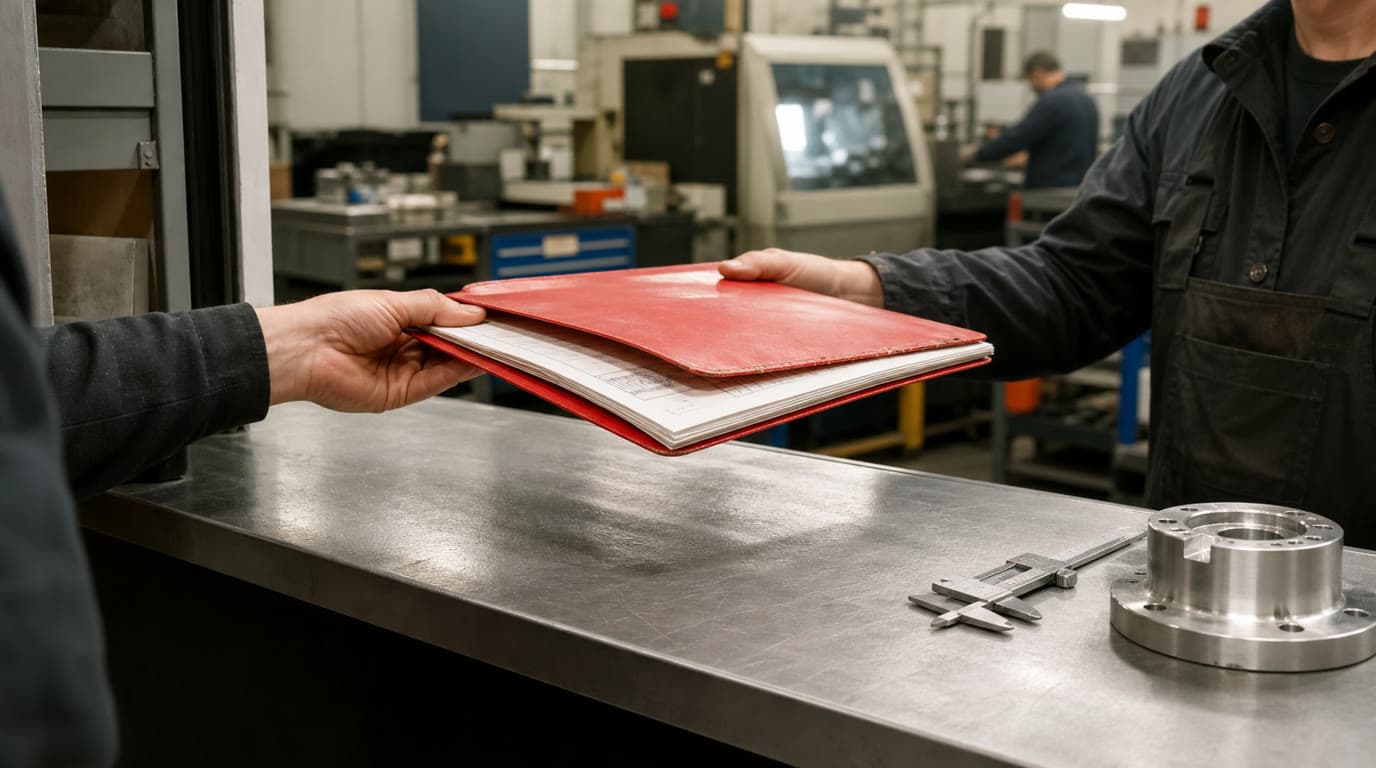
It's 8:14 AM. An email lands from a buyer at a regional OEM Lisa has quoted a dozen times before. Attached is a PDF with seven line items, a drawing for the non-standard part on line four, and a handwritten note scanned at an angle that's nearly unreadable.
The buyer wants pricing by end of week. Probably. The email actually says "as soon as possible," which Lisa knows means "Friday at the latest or we go to someone else."
She flags it, opens the PDF, prints it (the drawing doesn't render cleanly on screen), and writes the line items onto a yellow legal pad. This takes 12 minutes, because line three is ambiguous about whether it's the 1/4-inch or 3/8-inch variant and she needs to cross-reference a prior order in the ERP to figure out which one this customer actually uses.
This is minute one through twelve of a quote that "takes 15 minutes."
Step 2: The inventory and stock check
Lisa opens the ERP. She works in a system that's been customized so many times over 11 years that half the fields mean different things depending on which product family you're looking at. She knows this. New hires don't, and they make mistakes.
She searches each line item. Six of seven are straightforward. Line four is the problem -- the non-standard part on the drawing. The ERP shows two SKUs that are close but neither matches the spec exactly. She flags it for the shop foreman and moves on, because waiting for a response will take time she doesn't have right now.
Stock check: 15 minutes.
But she can't finish the quote until the foreman responds. So she puts it in a folder labeled "Pending" and picks up a different RFQ.
Step 3: Pricing verification
The ERP has pricing, but Lisa doesn't fully trust it. Material costs have moved three times in the last eight months, and the system gets updated quarterly at best. For commodity line items she knows are stable, she uses the ERP number. For anything involving steel or aluminum, she pulls up her supplier's most recent price sheet, which lives in a shared folder that may or may not be current.
Today it's current. She checks four line items against the sheet. One needs an adjustment. She recalculates the margin, makes a note on her legal pad.
Pricing verification: 20 minutes -- and that's a good day. When the shared folder is stale, she has to call the supplier rep, who may or may not pick up.
Step 4: Spec interpretation on the non-standard part
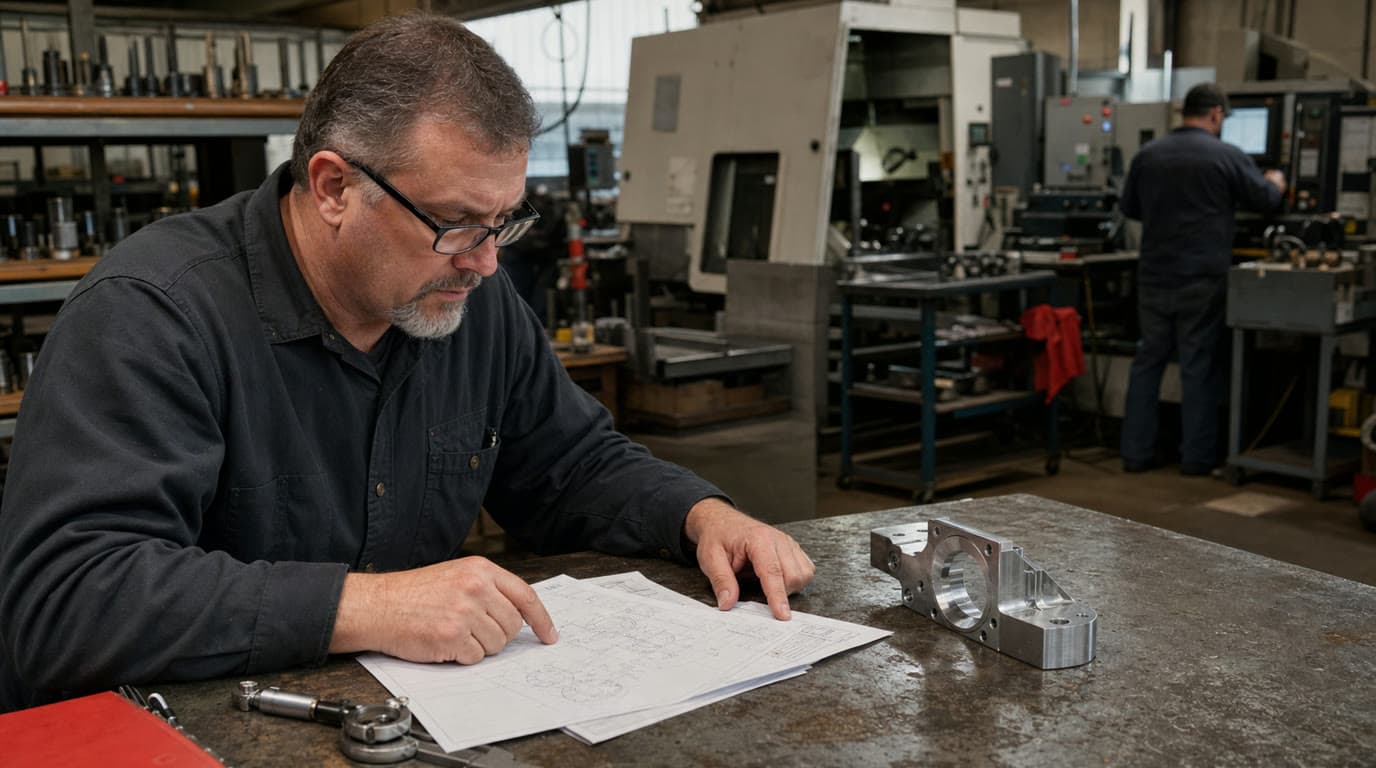
It's now 11:40 AM. The foreman responded. His verdict: the drawing on line four is for a custom bracket that the shop has made before, but not for this customer. He thinks they can do it, but wants to walk the print with the estimator before committing.
The estimator is on the floor until 2 PM.
This is the hidden cost that never shows up in any process map. The quote isn't stalled because anyone is incompetent or lazy. It's stalled because the information required to answer one question lives in the head of someone who is doing something else.
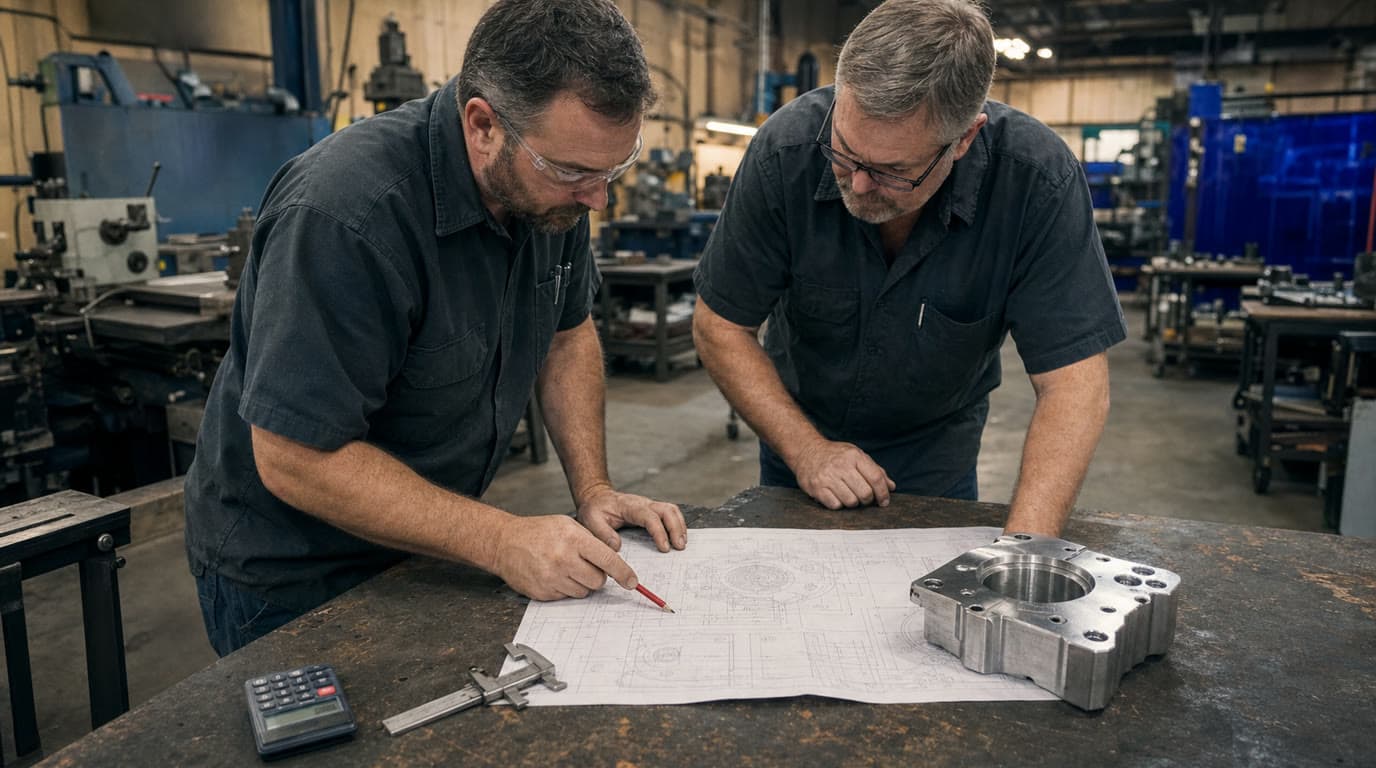
At 2:30 PM, Lisa gets a thumbs up from the estimator with a rough labor figure. She writes it down.
Spec interpretation and internal coordination: 25 minutes of actual work time, spread across six hours of elapsed time.
Step 5: Quote assembly
Now Lisa can actually build the quote. She opens the quote template in Excel (it's been the same template since 2018, with minor formatting updates), fills in the line items, applies the customer discount, adds freight based on the ZIP code buffer rule she keeps in her head, and writes a short cover note.
She double-checks the math. She converts it to PDF. She emails it.
Quote assembly: 15 minutes.
Total active work time across all five steps: just under 90 minutes. Total elapsed time from RFQ receipt to quote delivery: two full days, across three departments.
What this costs at scale
Lisa handles somewhere between 40 and 60 RFQs per week. Not every quote involves a non-standard part that requires an estimator. But most involve at least one friction point: an ambiguous spec, a stale price, a stock question that needs a human answer.
If the average quote consumes two hours of elapsed time and 90 minutes of active work, across a week that's 60 to 90 hours of labor -- most of it coordination and data retrieval, not skilled sales work.
At a fully-burdened cost in the range of $80,000 to $100,000 per FTE, that's roughly $40 to $50 per working hour. Fifty quotes a week at 90 minutes each works out to several thousand dollars in weekly labor spent on retrieval and coordination instead of selling.
And that's before you account for the quotes that get delayed past the buyer's decision window. Aberdeen's data on first-responder advantage suggests that a meaningful portion of deals lost to competitors weren't lost on price or capability. They were lost because the response came in on Thursday when the buyer had already moved on Tuesday.
The cost isn't just labor. It's the deals that don't show up in your win/loss report because they were never properly competed for.
The real problem isn't speed
Here's the thing: Lisa isn't slow. She's efficient, experienced, and she cares about getting it right. The problem isn't her pace. It's the structure she's working inside.
Every quote requires:
- Hunting for information that should be instantly accessible
- Waiting on humans who have other jobs to do
- Applying institutional knowledge that isn't written down anywhere
- Moving between systems that don't talk to each other
Manual quoting processes at most shops average three to four days end-to-end. Shops that have automated the data-gathering and routing steps bring that to two to four hours -- not because their people are faster, but because the quote doesn't sit in three inboxes waiting for a human to notice it.
Lisa will still be valuable after a better process exists. She'll be valuable because of her customer relationships and her judgment, not because she's the only person who knows the Morris freight buffer.
The questions worth asking
If you run inside sales at a shop like Lisa's, a few diagnostics that are worth sitting with:
What percentage of your quoting time is retrieval versus judgment? If most of the clock is spent finding information rather than deciding what to do with it, that's the process, not the people.
What happens to your win rate when your best quoting person is out? If the answer is "it drops" or "we scramble," you have a knowledge concentration problem, not a staffing problem.
How often do buyers circle back asking why they haven't heard from you? Every one of those emails is a signal that you're outside the first-responder window.
The goal isn't to rush quotes. It's to stop making skilled people do schlep work so they can get to the actual quote faster.
If this looked like your Tuesday morning, we'd like to show you what a different process looks like.